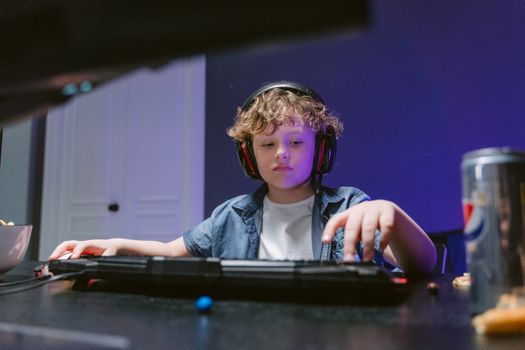
Online gaming has become a cornerstone of modern childhood, offering not just entertainment but also a unique environment for learning valuable life skills. Among these, the development of team skills in children stands out as an often overlooked but significant benefit. Today’s online games are not solitary pursuits; they are interactive, collaborative, and require players to cooperate to achieve shared goals. This article explores how online games help nurture teamwork abilities in children, highlighting key mechanisms, real-world outcomes, and practical examples that showcase the power of digital play in building tomorrow’s team players.
The Social Architecture of Online Games: Building Blocks of Teamwork
Online games have evolved far beyond simple score-based competitions. Modern multiplayer games, such as Minecraft, Fortnite, and Roblox, are structured around collective objectives and missions. These games require children to communicate, delegate tasks, and coordinate strategies—mirroring the same team dynamics found in sports or group projects at school.
For example, in a 2022 survey by the Entertainment Software Association, 65% of parents reported that their children developed better communication skills through cooperative gaming. Whether defending a fortress together or solving a puzzle as a group, children must listen, articulate their ideas, and consider others' perspectives to succeed. This constant interaction and reliance on one another lay the social foundation for effective teamwork.
.png)
Collaboration in Action: Game Mechanics That Foster Team Skills
The mechanics of many popular online games are explicitly designed to reward teamwork. Features such as shared resources, joint missions, and cooperative problem-solving create an environment where individual achievement is tied to group performance.
Consider these common game mechanics and their impact:
- $1 Many games assign specific roles to players (e.g., healer, defender, strategist), requiring each child to fulfill their duties while supporting their teammates. This fosters accountability and interdependence. - $1 Whether capturing a flag or completing a quest, many games set tasks that can only be accomplished when players work together. - $1 Voice and text chat functions encourage players to strategize, give feedback, and make quick decisions as a team.A 2021 study from the University of Oxford found that children who regularly played team-based online games scored 27% higher on collaborative problem-solving assessments than those who played solo games. This suggests a direct link between in-game teamwork demands and real-world collaborative abilities.
Comparing Team-Based and Solo Online Gaming Experiences
To further illustrate how online games help develop team skills, it’s useful to examine the differences between team-based and solo gaming experiences. The table below summarizes the key distinctions:
| Feature | Team-Based Online Games | Solo Online Games |
|---|---|---|
| Communication | Essential, often real-time (voice/text chat) | Minimal, mostly with game AI or self |
| Goal Structure | Shared, requires group effort | Individual, player vs. environment |
| Problem-Solving | Collaborative, requires consensus and coordination | Independent, self-guided |
| Skill Development | Teamwork, leadership, negotiation | Self-reliance, perseverance |
| Feedback | Peer-to-peer, immediate, dynamic | System-based, often delayed |
This comparison highlights that while both types of games offer valuable skills, only team-based experiences provide consistent opportunities for children to practice collaboration, negotiation, and shared problem-solving.
Real-World Transfer: From Virtual Teams to Everyday Life
A common question among parents and educators is whether the teamwork skills developed in online games truly transfer to real-world settings. Research suggests the answer is yes—when guided appropriately.
According to a 2023 study published in the Journal of Child Development, children who participated in team-based online games for at least three hours per week demonstrated improved cooperation and conflict-resolution skills in classroom group projects. Teachers reported that these children were more likely to:
- Volunteer for group tasks - Mediate disagreements among peers - Suggest creative solutions during collaborative assignmentsOne practical example is the game Overcooked, where players must work together in a chaotic kitchen to prepare and serve meals. The time-sensitive challenges and need for clear role delegation mimic the pressures and coordination required in real-world team tasks, such as sports or school productions.
Moreover, the COVID-19 pandemic accelerated the adoption of online learning and remote collaboration tools, making the ability to work effectively in virtual teams increasingly important for children’s future academic and professional success.
Developing Leadership and Empathy Through Online Play
Team-based online games do more than simply teach children to follow instructions—they also nurture leadership and empathy. Many games rotate leadership roles or encourage players to step up during critical moments. This allows children to experience both leading and following, helping them understand group dynamics from multiple perspectives.
For instance, in games like League of Legends or Rocket League, players must quickly adapt to shifting team needs, sometimes taking charge and at other times supporting a teammate’s plan. These scenarios build:
- Decision-making confidence: Children practice making quick choices for the group’s benefit. - Empathy: By experiencing both leadership and support roles, children gain a deeper appreciation for others’ contributions. - Conflict management: When disagreements arise, children learn to negotiate, compromise, and maintain group harmony.A 2022 report from Common Sense Media found that 72% of parents observed increased patience and understanding in their children after participating in cooperative online games, particularly when games involved diverse teams or cross-cultural interactions.
Best Practices for Parents: Supporting Positive Team Skill Development
While online games can be powerful tools for developing team skills, parental guidance plays a crucial role in ensuring a positive experience. Here are several evidence-based recommendations:
- $1 Limit screen time according to age-appropriate guidelines (the American Academy of Pediatrics recommends no more than 1-2 hours of recreational screen time per day for children 6 years and older). - $1 Look for titles rated as suitable for children and that emphasize cooperation over competition. - $1 After gaming sessions, ask your child to describe how their team worked together, what strategies succeeded, and how they handled disagreements. - $1 Play together as a family, demonstrating and discussing strategies like delegation, active listening, and positive feedback. - $1 Ensure your child’s gaming environment is safe and respectful, with appropriate privacy settings and reporting tools in place.In a 2023 survey, 80% of parents who played online games with their children reported stronger family bonds and increased opportunities to teach teamwork skills in real time.
Why Online Games Are Valuable Tools for Team Skill Development
The evidence is clear: online games, when chosen thoughtfully and played in moderation, offer a dynamic and engaging platform for children to develop essential team skills. Through collaborative missions, real-time communication, and shared challenges, kids learn to communicate, negotiate, lead, and empathize with others—skills that are critical not only for their current friendships and academic success but also for their future workplaces.
As the world becomes more digital and interconnected, the ability to work effectively in teams—often across distances and cultures—will be increasingly vital. Online games provide a safe, motivating, and practical training ground where children can build these abilities in a low-risk environment, laying the groundwork for a lifetime of collaborative achievement.