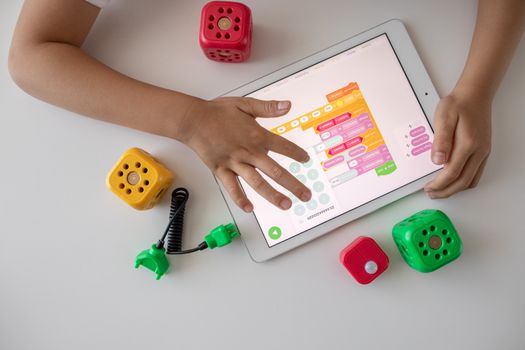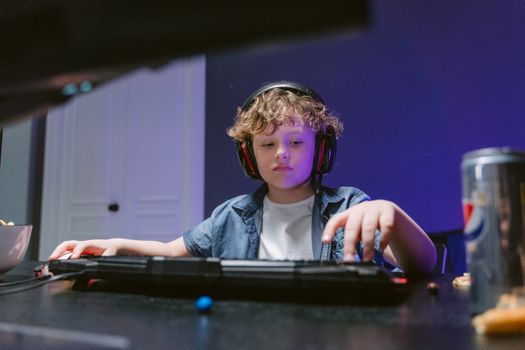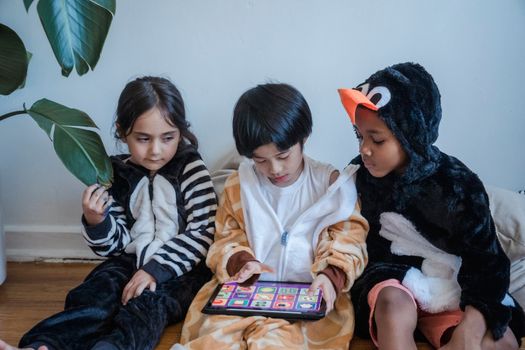
Children today are growing up in a digital world, where online games are part of daily life. While concerns about screen time and content are valid, there’s another side to the story: online games can be powerful tools for learning, especially for language development. From vocabulary acquisition to improved reading comprehension, online games offer a unique combination of engagement and educational value. In this article, we’ll explore how online games can improve children’s language skills, the science behind this phenomenon, and practical ways parents and educators can harness these benefits.
The Science Behind Language Learning Through Play
Play is a crucial part of childhood development, and language acquisition is no exception. According to a 2021 study by the American Academy of Pediatrics, children learn best when they are motivated and emotionally engaged. Online games, with their interactive elements and instant feedback, naturally create this environment. Unlike traditional classroom exercises, games immerse children in scenarios that require active listening, reading, and communication to succeed.
A 2020 survey by Common Sense Media found that over 60% of children aged 8 to 12 regularly play online games. Many of these games feature dialogue, instructions, and storylines that require understanding and interpreting language. For example, games like "Animal Crossing" and "Minecraft" encourage players to read messages, follow written quests, and interact with other players, all of which develop reading and comprehension skills.
.png)
Researchers at the University of Oxford discovered that children who regularly played story-driven online games scored 15% higher on vocabulary tests than those who didn’t. This suggests that the narrative and social aspects of games contribute directly to language growth.
Expanding Vocabulary Through Interactive Environments
Online games are packed with new words, phrases, and concepts. Unlike textbooks, which can sometimes feel repetitive or overwhelming, games introduce language in context. When children encounter unfamiliar words during gameplay, they are more likely to remember them because the words are linked to actions, objects, or experiences in the game world.
For example, in an adventure game, a player might need to “forge a weapon,” “gather resources,” or “negotiate with allies.” Each of these tasks introduces specialized vocabulary. Games like "Pokémon" teach children hundreds of unique names, types, and actions, while strategy games such as "Clash of Clans" require understanding terms like "reinforcement," "defense," or "upgrade."
A 2019 study published in the Journal of Educational Computing Research showed that children who played vocabulary-focused online games retained 30% more new words after four weeks compared to those who learned through traditional worksheets.
Enhancing Reading Comprehension and Critical Thinking
Many online games weave complex narratives and require players to read and interpret clues, instructions, or stories. Role-playing games (RPGs), for instance, often include dialogue trees, quest logs, and lore that must be read and understood to progress. This repeated exposure to written language in various forms helps children develop reading fluency and comprehension.
Moreover, games often present players with choices that impact the storyline, encouraging them to analyze information, predict outcomes, and make decisions. This process mirrors the skills used in reading comprehension tests, where understanding context and inferring meaning are vital.
A notable example is "The Sims," where players must read notifications, manage character dialogues, and make decisions based on written prompts. Such gameplay not only improves reading speed but also nurtures critical thinking and problem-solving abilities.
Fostering Communication Skills Through Social Interaction
Online games are rarely solitary. Many popular games include chat functions, forums, or voice communication, allowing children to interact with peers around the globe. This creates a dynamic environment for practicing conversational language, negotiating, and collaborating.
In multiplayer environments, children must articulate their ideas, ask questions, and provide instructions—all of which reinforce oral and written language skills. For instance, in team-based games like "Fortnite" or "Among Us," players coordinate strategies, debate plans, and reflect on outcomes, using language as their primary tool.
Research from the University of California, Irvine, found that children who regularly engage in multiplayer online games demonstrate improved narrative skills and greater confidence in expressing themselves compared to those who play solo or offline games.
Comparing Online Games to Traditional Language Learning Methods
How do online games stack up against more conventional language learning methods like textbooks, apps, or classroom exercises? Let’s look at a comparison of key factors:
| Aspect | Online Games | Traditional Methods |
|---|---|---|
| Engagement Level | High (interactive, motivating) | Varies (often passive) |
| Vocabulary Exposure | Contextual, varied, adaptive | Structured, limited context |
| Social Interaction | Real-time, global peers | Mostly classroom-based |
| Feedback & Correction | Instant, game-driven | Delayed (teacher/peer review) |
| Motivation to Continue | Intrinsic (rewards, progression) | Extrinsic (grades, tests) |
| Adaptability | Game adjusts to player level | One-size-fits-all approach |
This table highlights why online games are increasingly recognized as valuable supplements to traditional learning. Their interactive and adaptive nature keeps children invested and challenges them at their own pace.
Practical Tips for Parents and Educators
While online games offer clear language benefits, guidance is essential to maximize their potential and ensure safe, productive play. Here are some practical strategies:
1. Choose Age-Appropriate Games: Opt for games with rich storylines, dialogue, and educational content. Games rated “E for Everyone” or specifically designed for learning are generally safest for younger players. 2. Set Time Limits: The American Academy of Pediatrics recommends no more than 1-2 hours of recreational screen time per day for children aged 6 and older. Balance gaming with other activities. 3. Encourage Reflection: After gameplay, discuss new words, plot developments, or decisions made in the game. This reinforces learning and critical thinking. 4. Join In: Play games together when possible. Parents and educators can model good language use and help children navigate challenging content. 5. Monitor Online Interactions: Teach children about online safety and respectful communication. Use parental controls to manage chat features if necessary. 6. Supplement with Offline Activities: Encourage children to write about their gaming experiences, such as creating a game diary, drawing scenes, or crafting their own stories inspired by gameplay.Real-Life Success Stories: Online Games in Action
The positive effects of online games on language skills aren’t just theoretical—there are countless real-world examples. For instance, a primary school in Helsinki, Finland, integrated the game "Minecraft: Education Edition" into its English curriculum. Teachers reported a 25% improvement in students’ English vocabulary and a noticeable boost in their willingness to speak and write in class.
Another case involved children learning a second language through online role-playing games. A study by the University of Gothenburg in Sweden found that students who played MMORPGs (Massively Multiplayer Online Role-Playing Games) in English improved their reading and speaking abilities faster than peers who only relied on classroom instruction.
These stories demonstrate the versatility of online games as teaching tools and their potential to reach learners who might struggle with traditional methods.
Final Thoughts on Online Games and Language Skill Development
Online games are more than just entertainment for children—they are immersive worlds filled with opportunities for language growth. By exposing players to new vocabulary, challenging them to read and think critically, and facilitating real-time communication, games create a fertile ground for language development. With the right guidance, online games can complement traditional learning and help children become more confident, curious, and capable language users. As digital natives, today’s children are uniquely positioned to benefit from this exciting blend of play and education.