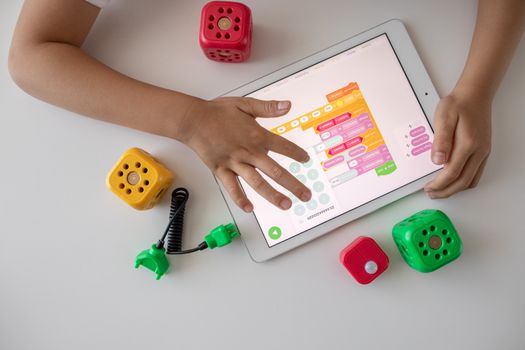
In today’s fast-paced digital world, the landscape of learning has changed dramatically, with educational games taking center stage in classrooms and homes alike. Mathematics and science, often seen as challenging subjects, can become exciting adventures through the right educational games. These interactive tools do more than entertain—they build foundational skills, foster critical thinking, and ignite curiosity in young minds. But which educational games truly help children and teens develop mathematics and science skills? This article explores the top games, their impact, and why they are so effective.
The Science Behind Learning Through Games
Educational games are not just about fun—they are grounded in solid pedagogy. Studies show that interactive learning increases engagement and retention. According to a 2022 report by the Joan Ganz Cooney Center, students who used educational games for 30 minutes daily improved their math scores by an average of 15% over a four-month period.
The effectiveness of educational games lies in active participation. Unlike rote memorization, games require students to solve problems, make decisions, and experiment within a safe environment. Neuroscience research supports this approach, showing that hands-on learning activates multiple areas of the brain, making it easier to transfer knowledge from short-term to long-term memory.
.png)
Games like “DragonBox Algebra” and “Kerbal Space Program” use visual and interactive elements to demystify abstract concepts, making learning more accessible for all types of learners. These tools can bridge the gap for students who struggle with conventional teaching methods, offering personalized and adaptive experiences.
Top Educational Games for Developing Math Skills
When it comes to mathematics, the right educational games can transform anxiety into enthusiasm. Here are some standout titles that have proven effective in sharpening math abilities:
DragonBox Series: Widely praised by educators, DragonBox offers a suite of games that introduce algebraic thinking as early as age 5. The original “DragonBox Algebra 5+” uses puzzles to teach the principles of algebra without the intimidating symbols, while “DragonBox Numbers” sets the stage for basic arithmetic concepts.
Prodigy Math Game: Used by over 100 million students worldwide, Prodigy combines role-playing adventure with adaptive math challenges tailored to each learner’s level. The game covers material from grades 1 through 8, making it versatile for a broad range of ages.
Math Blaster: A classic, Math Blaster has been around for decades but remains relevant thanks to continuous updates. The game uses space-themed missions to reinforce addition, subtraction, multiplication, and division, helping students practice fundamental skills under time constraints.
Osmo Genius Kit: Blending physical play with digital technology, the Osmo Genius Kit includes games like “Numbers” and “Tangram,” which use tangible pieces to solve math puzzles displayed on a tablet. This kinesthetic approach appeals especially to tactile learners.
According to a 2023 survey by Common Sense Media, 72% of teachers reported noticeable improvement in students’ math engagement after incorporating educational games into their lesson plans.
Innovative Games for Science Skill Development
Science is a field built on exploration, and the best educational games harness this spirit. Here are some of the most effective science games for developing skills across biology, physics, chemistry, and engineering:
Kerbal Space Program: This sophisticated game introduces players to the basics of physics, engineering, and space exploration. Players design and launch rockets, learning concepts like gravity, thrust, and orbital mechanics in the process. NASA has even used Kerbal Space Program in outreach programs to inspire future scientists.
CellCraft: Designed for middle and high school students, CellCraft puts players in control of a cell, challenging them to manage resources, defend against viruses, and carry out life processes. The game teaches cellular biology in a hands-on, memorable way.
The Magic School Bus Explores the Solar System: Based on the beloved books and TV series, this game engages elementary students with missions that teach about planets, gravity, and space travel.
Tyto Online: A multiplayer online game where players take the role of scientists on an alien planet, Tyto Online covers topics from ecosystems to genetics. Students complete quests, run experiments, and apply the scientific method, all within a safe virtual world.
Research from the Bill & Melinda Gates Foundation revealed that students using science-based educational games showed a 20% improvement in understanding complex concepts compared to traditional textbook learning.
Comparing Popular Educational Math and Science Games
With so many options available, it can be challenging to know which educational games are most effective for mathematics and science. The following table offers a side-by-side comparison of some of the top choices, highlighting their focus areas, recommended ages, and unique features.
| Game | Subject Focus | Recommended Age | Key Features | Notable Statistic |
|---|---|---|---|---|
| DragonBox Algebra 5+ | Mathematics (Algebra) | 5-12 | Puzzle-based, symbol-free learning | Users show 93% improvement in algebraic thinking after 2 weeks |
| Prodigy Math Game | Mathematics (General) | 6-14 | Adaptive, curriculum-aligned, RPG elements | 100 million+ users globally |
| Kerbal Space Program | Science (Physics/Engineering) | 10-18 | Simulation, real-world physics, engineering challenges | Adopted by 50+ schools for STEM programs in 2023 |
| CellCraft | Science (Biology) | 12-18 | Resource management, cellular biology | Used in 1,200+ classrooms worldwide |
| Osmo Genius Kit | Mathematics (Numbers, Spatial Reasoning) | 5-10 | Physical-digital play, tactile engagement | Winner of 10+ educational awards |
Why Educational Games Succeed Where Traditional Methods Struggle
The shift toward game-based learning is not accidental. Traditional classroom instruction often faces challenges like limited one-on-one attention, lack of real-time feedback, and a “one-size-fits-all” curriculum. Educational games, on the other hand, provide several significant advantages:
Immediate Feedback: Games offer instant responses to a player’s actions, allowing students to learn from mistakes and adjust strategies in real time.
Personalization: Adaptive algorithms in games like Prodigy and DragonBox assess a learner’s skill level and adjust the difficulty accordingly, ensuring that each student is appropriately challenged.
Motivation and Engagement: Gamification elements such as rewards, levels, and storylines keep learners motivated for longer periods. According to the Entertainment Software Association, 74% of teachers in the U.S. found that students were more engaged when lessons included game-based activities.
Safe Failure: Games create a safe environment for trial and error. Unlike tests or graded assignments, failure in a game is a step toward mastery, not a setback.
Inclusivity: Many educational games are designed with accessibility in mind, offering options for different learning styles and needs.
Integrating Educational Games into Daily Learning
While educational games are powerful, their impact depends on thoughtful integration into daily routines. Here are strategies for maximizing their benefits:
Balance and Supervision: Experts recommend limiting gameplay to 20-40 minutes per session for young learners to prevent screen fatigue while maximizing focus.
Parental Involvement: Parents can enhance learning by playing games alongside their children, asking questions, and relating in-game concepts to real-world situations.
Classroom Use: Teachers can assign specific games as homework or use them in class to reinforce lessons. For example, after a lesson on photosynthesis, students might play a game like “Plant Tycoon” to solidify their understanding.
Progress Tracking: Many educational games offer dashboards or reports for parents and teachers to monitor student progress, identify areas for improvement, and celebrate achievements.
Blended Learning: Combining digital games with hands-on activities (such as science experiments or math manipulatives) creates a well-rounded educational experience.
Final Thoughts on Educational Games for Math and Science Skills
Educational games have revolutionized the way children and teens approach mathematics and science. By transforming abstract concepts into interactive adventures, these games cater to a diverse range of learning styles and abilities. Whether it’s building rockets in Kerbal Space Program or solving algebra puzzles in DragonBox, students gain confidence and competence in essential STEM subjects.
As the evidence shows, educational games are much more than digital distractions—they are valuable tools that build critical skills for the future. With careful selection and integration, parents and educators can harness the power of play to inspire the next generation of mathematicians and scientists.