Virtual reality (VR) is no longer a futuristic fantasy—it is rapidly becoming a cornerstone of the gaming industry, transforming the way players experience digital worlds. From the immersive environments of blockbuster titles to the innovative gameplay mechanics made possible only by VR hardware, this technology is redefining entertainment in ways never before imagined. As VR headsets become more accessible and game developers continue to push creative boundaries, the gaming landscape is undergoing a profound shift. This article explores how virtual reality is changing the gaming landscape, examining its impact on immersion, social interaction, game development, accessibility, and the future of competitive gaming.
The Rise of Immersive Gameplay in Virtual Reality
One of the most significant changes VR brings to gaming is the heightened sense of immersion it provides. Unlike traditional consoles or PC monitors, VR headsets place players directly inside the game world, offering a 360-degree field of view and realistic depth perception. In 2023, the global VR gaming market was valued at $12.13 billion, and it is projected to reach $22.9 billion by 2028, according to Grand View Research. This surge is largely driven by the demand for more immersive experiences.
Games like "Half-Life: Alyx," developed exclusively for VR platforms, showcase how immersive storytelling and interactivity can be elevated. In Alyx, players don’t just control a character—they embody her, physically reaching out to interact with objects, solve puzzles, and engage in combat. This level of involvement creates a sense of presence that standard gaming setups simply cannot replicate.
.png)
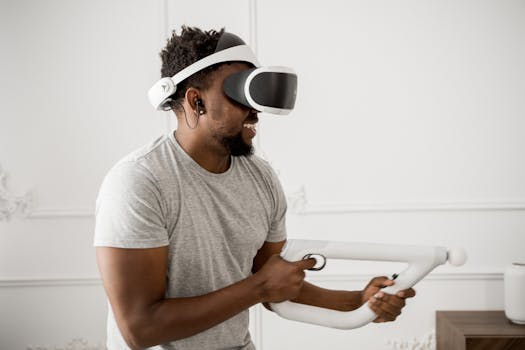
Motion tracking technology further enhances immersion. Devices like the Meta Quest 3 and PlayStation VR2 track users’ head and hand movements in real-time, allowing intuitive, natural interactions. Research shows that players using VR are 45% more likely to report feeling "inside" the game world compared to those playing on standard screens. This sense of embodiment is changing how games are designed, focusing on physical movement and environmental interaction as core mechanics.
Social Interaction and Shared VR Experiences
Virtual reality doesn't just immerse the individual; it also connects communities in novel ways. Multiplayer VR titles like "VRChat" and "Rec Room" enable users to interact with others in shared virtual spaces, using customizable avatars and voice chat. Over 2.5 million users log in to VRChat monthly, illustrating a growing appetite for social VR spaces.
Social interaction in VR is more nuanced and expressive than in traditional online games. Gesture recognition allows players to wave, point, or even dance, making communication more natural and engaging. These capabilities are fostering vibrant online communities centered around shared experiences—from attending virtual concerts to collaborating on art projects.
In 2021, the VR-based event platform AltspaceVR hosted over 10,000 virtual events, ranging from comedy shows to educational workshops. The ability to gather in lifelike environments regardless of physical location is breaking down geographical barriers, making gaming more inclusive and socially dynamic.
Redefining Game Development and Design
VR is not just changing how games are played—it's also transforming how they are developed. Designers must rethink traditional mechanics to suit a three-dimensional, embodied experience. For example, locomotion (movement within the game world) poses unique challenges in VR, as conventional methods like using a joystick can cause motion sickness. Developers have responded by inventing new systems, such as teleportation-based movement or natural walking within a play space.
The learning curve for VR development is steep, but the rewards are substantial. According to a 2022 survey by the Game Developers Conference, 38% of studios are actively developing for VR platforms—a significant jump from just 14% in 2016. Tools like Unity and Unreal Engine now include built-in support for VR, making it more accessible for indie developers to experiment with the medium.
VR has also inspired entirely new genres and gameplay styles. For instance, rhythm games like "Beat Saber" combine music, motion, and visual feedback in a way that would be impossible on traditional consoles. Puzzle and escape room experiences benefit from the tactile sense of manipulating objects in three dimensions. These innovations are expanding the creative possibilities for game designers and offering players fresh, engaging content.
Accessibility and Hardware Evolution
As with any emerging technology, accessibility has been a challenge for VR gaming. Early headsets were expensive and required powerful PCs, limiting their reach. However, recent advancements are making VR more affordable and user-friendly. The Meta Quest 2, launched in late 2020, became the first standalone VR headset to surpass 10 million units sold. At a price point under $400, it eliminated the need for external hardware, bringing VR to a much broader audience.
Comfort and safety have also improved. Modern headsets are lighter, offer adjustable straps, and feature built-in safety features like boundary systems, which alert users when they approach real-world obstacles. Customizable accessibility options—such as seated gameplay modes or one-handed controls—are making VR more inclusive for players with disabilities.
The table below compares key VR headsets as of 2023, highlighting their accessibility features and price points:
| VR Headset | Release Year | Platform | Approx. Price (USD) | Key Accessibility Features |
|---|---|---|---|---|
| Meta Quest 2 | 2020 | Standalone | $399 | Wireless, boundary system, seated mode, one-handed controls |
| PlayStation VR2 | 2023 | PS5 | $549 | Eye tracking, adaptive triggers, vibration feedback, adjustable fit |
| Valve Index | 2019 | PC | $999 | Finger tracking, customizable controllers, room-scale tracking |
| Pico 4 | 2022 | Standalone | $425 | Lightweight, wireless, hand tracking, boundary system |
With these advancements, the global VR user base is projected to reach 65.9 million by 2024, according to Statista.
Virtual Reality’s Impact on Esports and Competitive Gaming
Esports has become a multi-billion dollar industry, and VR is poised to carve out its own niche within this competitive arena. VR esports titles like "Echo VR" and "Onward" are attracting dedicated player bases and hosting international tournaments. In 2022, the VR League World Finals awarded over $250,000 in prizes, signaling serious investment in the space.
VR changes the nature of competition by requiring physical skill as well as strategic thinking. Reflexes, stamina, and spatial awareness are all tested in VR tournaments—sometimes likened to a blend of traditional sports and video games. This physicality makes VR esports more engaging for both participants and spectators, as viewers can watch players' real-life movements alongside in-game action.
Spectator experiences are also evolving. With VR, fans can watch matches from within the virtual arena, enjoying a front-row view of the action. Developers are experimenting with interactive features, such as switching vantage points or accessing instant replays in 3D space. These innovations enhance the connection between players and audiences, paving the way for a new era of competitive gaming.
The Future of Virtual Reality in Gaming
Looking ahead, the trajectory of VR in gaming is both exciting and unpredictable. Industry analysts predict that by 2030, VR gaming revenue will surpass $44.7 billion globally. As hardware continues to advance, we can expect lighter headsets, higher-resolution displays, and more sophisticated tracking systems.
Emerging technologies like haptic feedback suits and omnidirectional treadmills promise even greater immersion, allowing players to feel impacts or physically walk within the game world. Cloud-based VR streaming may eventually remove the need for expensive hardware altogether, making high-end experiences accessible to anyone with a fast internet connection.
Moreover, VR’s applications are expanding beyond entertainment. Educational games, therapy simulations, and virtual fitness programs are all leveraging VR’s unique capabilities. This diversification will further entrench VR as a transformative force across multiple domains, with gaming remaining at the forefront of innovation.