Games are more than just a source of entertainment for children—they are powerful tools that can nurture essential life skills from a young age. Among these skills, critical thinking stands out as one of the most valuable. In a rapidly changing world, the ability to analyze, reason, and solve problems creatively is crucial for future success. But how exactly can games support the development of critical thinking in children? This article explores the unique ways different types of games—ranging from board games to digital adventures—help shape young minds into flexible, analytical thinkers, supported by research, examples, and practical insights for parents and educators.
The Building Blocks: What Is Critical Thinking in Childhood?
Critical thinking in children refers to their ability to objectively analyze information, consider multiple perspectives, make reasoned judgments, and solve problems independently. According to a 2022 report from the World Economic Forum, critical thinking is one of the top five skills children will need for future jobs. Yet, only 31% of teachers worldwide believe their students are proficient critical thinkers by age 12.
Unlike rote memorization or simple recall, critical thinking involves:
.png) - Asking questions and being curious
- Identifying patterns and connections
- Evaluating evidence and arguments
- Making decisions and reflecting on outcomes
- Asking questions and being curious
- Identifying patterns and connections
- Evaluating evidence and arguments
- Making decisions and reflecting on outcomes
These skills don’t develop overnight—they require consistent practice in safe, engaging environments. That’s where games come in.
How Different Types of Games Foster Critical Thinking
Games come in many forms, each offering unique opportunities to develop critical thinking. Let’s break down the impact of key game types:
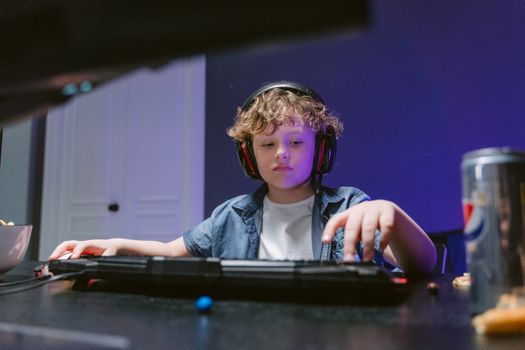
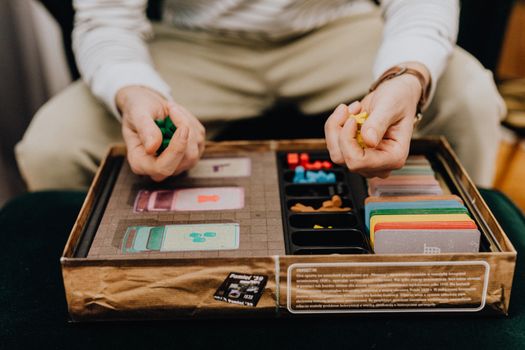
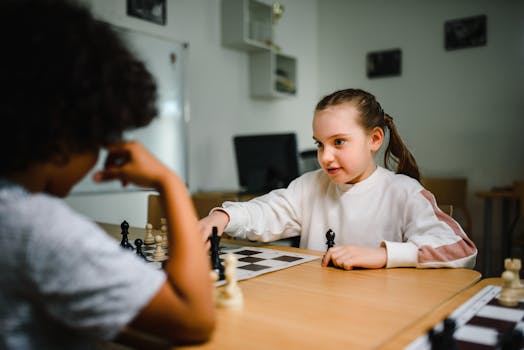
1. Board Games: Classics like Chess, Clue, and Settlers of Catan challenge children to anticipate opponents’ moves, plan several steps ahead, and adapt strategies on the fly. For example, Chess has been shown to increase logical reasoning skills by 17% in children after just 20 hours of play, according to a study published in the journal "Thinking Skills and Creativity." 2. Puzzle Games: Titles such as Sudoku, Tangrams, and Rubik’s Cube require children to analyze patterns, experiment with solutions, and learn from trial and error. Researchers from the University of Chicago found that children who regularly solve puzzles develop superior spatial reasoning and problem-solving skills. 3. Video Games: Modern video games like Portal, Zelda, and Minecraft immerse children in complex worlds that demand resource management, creative thinking, and collaboration. A 2021 study by Oxford Internet Institute showed that children who played strategy-based video games for 30 minutes a day improved their cognitive flexibility by 15% over six weeks. 4. Role-Playing and Story Games: Role-playing games (RPGs) such as Dungeons & Dragons encourage children to consider different perspectives, weigh consequences, and make narrative decisions that affect outcomes—key components of critical thought.Active Learning: The Game-Based Approach vs. Traditional Methods
Traditional education often emphasizes memorization and passive receipt of information. In contrast, games place children in the center of active learning. Here’s a direct comparison:
| Aspect | Traditional Learning | Game-Based Learning |
|---|---|---|
| Engagement | Often passive; student listens or reads | Active participation; student makes choices |
| Feedback | Delayed, often at test time | Immediate, through in-game results |
| Problem Solving | Standardized, pre-set problems | Dynamic, context-driven challenges |
| Collaboration | Individual work or limited group projects | Frequent teamwork, negotiation |
| Motivation | External (grades, rewards) | Intrinsic (achievement, mastery) |
This table highlights why games are so effective for developing critical thinking: they immerse children in real-time decision-making, problem-solving, and reflection.
Real-World Examples: Case Studies in Critical Thinking Development
Let’s look at how children develop critical thinking through specific games:
- Chess Clubs: In New York City, public schools introduced chess clubs to over 3,000 students. After one year, reading scores improved by 12% and math by 19%, largely attributed to the planning and strategic thinking fostered by chess. - Minecraft in the Classroom: Teachers worldwide use Minecraft’s Education Edition to teach logic, architecture, and resource management. In Sweden, 98% of teachers who used Minecraft reported increased student engagement and better problem-solving skills. - Escape Room Games: Both physical and digital escape rooms require players to decode clues, collaborate, and think under pressure. A 2023 study in the journal "Educational Technology Research and Development" found that children who participated in escape room activities scored 22% higher on critical thinking assessments than those who did not.The Science Behind Games and Cognitive Growth
How do games actually change the brain to support critical thinking? Neuroscientific research offers some answers:
- Cognitive Flexibility: Games require players to switch strategies, adapt to new rules, and learn from mistakes, which strengthens the brain’s prefrontal cortex—the hub of critical thinking. - Pattern Recognition: Many games challenge children to spot patterns, sequences, or hidden rules, enhancing neural connectivity and analytical reasoning. - Decision-Making Under Uncertainty: Games simulate real-life ambiguity, training children to assess risks and make informed choices even without all the information.For example, a 2020 study from Stanford University demonstrated that children who played logic-based games showed a 23% increase in the density of white matter in brain regions linked to critical reasoning, compared to a control group.
Guidelines for Parents and Educators: Maximizing the Benefits
While games have clear benefits for critical thinking, the right approach is essential. Here are practical tips to help parents and educators harness the power of games:
- Choose Age-Appropriate Games: Look for games that match a child’s developmental level. Games that are too easy won’t challenge, while those too hard may frustrate. - Encourage Reflection: After a game, discuss strategies and decisions. Ask open-ended questions like, “What would you do differently next time?” or “Why did you choose that solution?” - Mix Game Types: Rotate between board games, puzzles, and digital games to engage different aspects of critical thinking. - Foster Collaboration: Group games build skills in negotiation, argumentation, and teamwork—key for real-world problem-solving. - Set Boundaries: Balance playtime with other activities and ensure games don’t replace homework or physical activity.According to the American Academy of Pediatrics, children aged 6-12 should spend no more than 1-2 hours a day on recreational screen-based games, while non-digital games can be played more flexibly.
The Lasting Impact: Lifelong Critical Thinking Skills Through Play
Games are more than a pastime—they are a training ground for the mind. When integrated thoughtfully into daily routines, games can sharpen children’s ability to analyze, reason, and solve complex problems. From the chessboard to the digital realm, children learn to weigh choices, adapt strategies, and reflect on consequences—skills that serve them throughout school and into adulthood.
By embracing a diverse mix of games and engaging children in reflective conversations about their play, parents and educators can cultivate a generation of agile, innovative thinkers ready for whatever challenges the future may bring.