Video games have become one of the world’s most influential forms of entertainment, with dedicated gaming consoles sitting at the heart of this revolution. From simple blocky graphics in the 1970s to today’s ultra-realistic, internet-connected powerhouses, the history of gaming consoles is a fascinating journey through technological innovation, fierce rivalries, and changing cultural landscapes. This article traces the evolution of home video game consoles, from the pioneering first generation to the cutting-edge devices of the present day.
The Dawn of Home Gaming: First and Second Generation Consoles
The history of gaming consoles began in the early 1970s, when the concept of playing video games at home was revolutionary. The first generation of consoles, launched in 1972, was epitomized by the Magnavox Odyssey. Developed by Ralph Baer, often called the "Father of Video Games," the Odyssey could display simple white blocks on a black screen. It came with plastic overlays for the TV screen and used interchangeable game cards. Selling approximately 350,000 units before its discontinuation in 1975, the Odyssey laid the groundwork for the industry.
The second generation arrived in 1976, marked by the Atari 2600. Unlike its predecessors, the 2600 used microprocessor-based hardware and ROM cartridges, enabling a library of games rather than a handful of built-in titles. The Atari 2600's joystick controller and colorful graphics captivated millions, selling over 30 million units during its run—an extraordinary figure for its era. This period also saw the introduction of Intellivision and ColecoVision, which provided improved graphics, sound, and complex controllers, setting new standards for home gaming.
.png)
The Golden Age: Third and Fourth Generation Breakthroughs
The mid-1980s marked the arrival of what many consider the golden age of consoles. The 1983 North American video game crash, triggered by market oversaturation and low-quality software, was reversed by the launch of the Nintendo Entertainment System (NES) in 1985 (released as the Famicom in Japan in 1983). The NES redefined the market with its strict quality control, introducing beloved franchises like Super Mario Bros., The Legend of Zelda, and Metroid. By 1990, Nintendo had sold over 60 million NES units worldwide.
The fourth generation began in 1987 with the PC Engine (TurboGrafx-16) and was dominated by the rivalry between the Sega Genesis (Mega Drive) and the Super Nintendo Entertainment System (SNES). These consoles brought 16-bit graphics, enhanced sound, and vast libraries of games. The Genesis, released in 1988 (Japan) and 1989 (North America), offered arcade-quality graphics and speed, while the SNES, launched in 1990 (Japan) and 1991 (North America), featured advanced effects like Mode 7 scaling and rotation. By the mid-1990s, the SNES had sold 49 million units, while the Genesis reached 30 million.
The Rise of 3D and Multimedia: Fifth and Sixth Generation Consoles
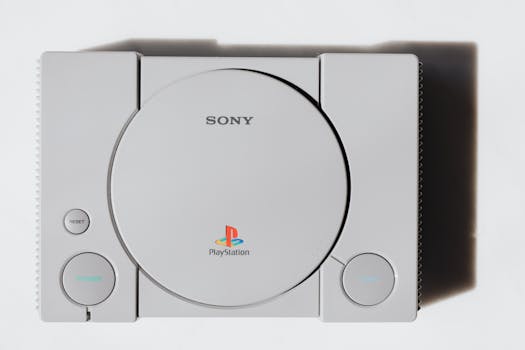
The gaming landscape transformed dramatically in the fifth generation, starting in 1994 with the Sony PlayStation. This era was characterized by the shift to CD-ROMs, which offered greater storage for full-motion video, 3D graphics, and expansive worlds. The PlayStation, with over 102 million units sold, became a cultural phenomenon, launching franchises such as Final Fantasy VII, Gran Turismo, and Metal Gear Solid. The Nintendo 64, released in 1996, pioneered analog controls and 3D gameplay with titles like Super Mario 64 and The Legend of Zelda: Ocarina of Time, selling around 32 million units.
The sixth generation saw further advances. The Sony PlayStation 2 (PS2), released in 2000, remains the best-selling console of all time with over 155 million units sold. It doubled as a DVD player, helping to popularize the format. Microsoft entered the market in 2001 with the Xbox, introducing online multiplayer through Xbox Live. Nintendo’s GameCube, while less commercially successful, featured innovative games and the first use of optical discs in Nintendo hardware.
Online Play, HD Graphics, and New Experiences: Seventh and Eighth Generations
The seventh generation, beginning with the Xbox 360 in 2005, ushered in high-definition graphics, online connectivity, and digital game distribution. The Xbox 360's robust online services and the PlayStation 3's Blu-ray capabilities drove fierce competition. Nintendo's Wii, launched in 2006, broke new ground with its motion controls, appealing to families and non-traditional gamers. The Wii sold over 101 million units, surpassing both its competitors in total sales.
The eighth generation brought further innovations. The PlayStation 4, released in 2013, focused on social features and powerful hardware, eventually selling over 117 million units. The Xbox One emphasized multimedia capabilities but lagged behind in sales. Nintendo rebounded from the underperforming Wii U with the Nintendo Switch in 2017. The Switch’s hybrid design—usable as both a home console and a portable device—has sold over 129 million units as of 2023, making it Nintendo’s best-selling home console ever.
Comparing Console Generations: A Data Overview
The evolution of gaming consoles can be better appreciated by comparing the features and market impact of each generation’s standout systems. Below is a table summarizing key data points for select models:
| Generation | Console | Release Year | Units Sold (Millions) | Key Innovation |
|---|---|---|---|---|
| First | Magnavox Odyssey | 1972 | 0.35 | First home console |
| Second | Atari 2600 | 1977 | 30 | ROM cartridge games |
| Third | Nintendo Entertainment System | 1985 | 61.9 | Quality control, franchises |
| Fourth | Super Nintendo | 1991 | 49.1 | 16-bit graphics |
| Fifth | Sony PlayStation | 1994 | 102.4 | CD-ROM, 3D graphics |
| Sixth | PlayStation 2 | 2000 | 155 | DVD playback |
| Seventh | Nintendo Wii | 2006 | 101.6 | Motion controls |
| Eighth | Nintendo Switch | 2017 | 129 | Hybrid design |
The Modern Era: Ninth Generation and the Future of Gaming Consoles
The ninth generation, beginning in late 2020, marks the latest leap in console technology. The PlayStation 5 and Xbox Series X/S boast custom SSD storage for near-instant loading, ray tracing for lifelike lighting, and 4K/8K resolution support. As of early 2024, the PlayStation 5 has sold over 50 million units despite global supply shortages. Cloud gaming, subscription services like Xbox Game Pass, and cross-platform play are reshaping how players access and experience games.
Nintendo, while yet to introduce a ninth-generation system as of 2024, continues to thrive with the Switch, emphasizing unique gameplay experiences over raw power. Meanwhile, streaming devices and mobile gaming are emerging as potential disruptors, suggesting that the definition of a "console" may evolve further in the coming years.
Impact and Legacy: How Consoles Changed Entertainment
The journey from the Magnavox Odyssey to today’s hyper-connected platforms reflects the relentless pace of technological progress and the enduring appeal of interactive entertainment. Key milestones—such as the introduction of microprocessors, the development of 3D graphics, the rise of online play, and the advent of hybrid and portable systems—have shaped not just video games, but wider culture.
Consider these facts: - As of 2023, the global video game console market was valued at $52.5 billion. - Over 3 billion people worldwide play video games, with consoles accounting for a significant share of this audience. - Franchises born on consoles—such as Mario, Pokémon, and Call of Duty—have generated billions in revenue and become cultural touchstones.Gaming consoles have influenced everything from how we socialize to how we consume media, with many devices now serving as hubs for streaming movies, music, and more. The persistent innovation and fierce competition between manufacturers ensure that the evolution of gaming consoles remains an exciting story—one that continues to unfold.