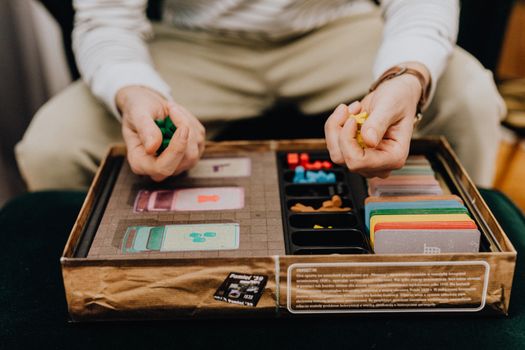
Every parent and educator dreams of nurturing a child’s creativity, but with so many distractions in today’s world, fostering creative thinking can seem challenging. Yet, one of the most effective—and fun—ways to unlock a child’s creative potential is through thoughtfully chosen games. Whether played at home, in the classroom, or with friends, games offer opportunities for children to think outside the box, solve problems in innovative ways, and develop mental flexibility. In this article, we’ll explore the best actionable tips for selecting and using games to develop creative thinking in children, why this matters, and how you can seamlessly integrate these practices into everyday life.
The Science Behind Games and Creative Thinking in Kids
Creativity is not just an innate talent—it’s a skill that can be honed with the right experiences. According to a 2022 study by the American Psychological Association, children who regularly engage in creative play show a 33% higher ability to generate original solutions to problems compared to those who don’t. Games play a pivotal role in this process by providing a structured yet flexible environment for experimentation and imagination.
Why do games work so well? Cognitive scientists suggest that games activate the brain’s prefrontal cortex, responsible for imaginative thought, planning, and problem-solving. Activities such as improvisational games, open-ended puzzles, and strategy-based board games encourage neural connections that support creative thinking. Unlike rote tasks, games allow children to explore multiple solutions, learn from mistakes without fear of failure, and adapt to evolving challenges—key elements in creative development.
.png)
Key Features of Games That Foster Creativity
Not all games are created equal when it comes to nurturing creativity. When seeking games to develop creative thinking in children, consider these key features:
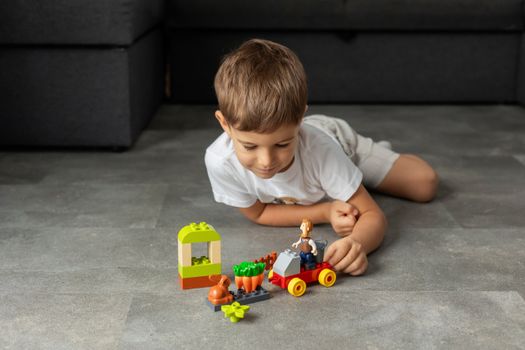
1. Open-Ended Play: Games that don’t have one “right” answer or linear solution encourage divergent thinking. Examples include building blocks (like LEGO), sandbox video games (such as Minecraft), or collaborative storytelling games. 2. Problem-Solving Elements: Games that present challenges with multiple solutions help children learn to approach problems from different angles. For instance, escape room board games or puzzle-based apps like Monument Valley prompt flexible thinking. 3. Role-Playing and Imagination: Pretend play games, theater improvisations, or character-driven adventures let children step into new roles and invent scenarios, fostering empathy and out-of-the-box ideas. 4. Collaboration and Communication: Group games that require teamwork and idea sharing, such as Pictionary or cooperative board games like Pandemic, help kids develop creative solutions as a team. 5. Limited Rules, Maximum Flexibility: Games with minimal constraints allow for rule-bending and experimentation. Card games like Uno, where variations can be invented, are perfect for this.Top Game Genres for Stimulating Creative Thinking
Let’s break down the genres of games most effective at sparking creativity, with examples and tips for parents and educators.
| Game Genre | Examples | Creative Thinking Benefits |
|---|---|---|
| Construction & Building | LEGO, Magna-Tiles, Minecraft | Spatial reasoning, innovation, design skills |
| Puzzle & Strategy | Rush Hour, Gravity Maze, Monument Valley | Problem-solving, planning, adapting strategies |
| Storytelling & Role-Play | Rory's Story Cubes, Dungeons & Dragons, puppet theater | Narrative creation, empathy, improvisation |
| Art & Creation | Drawful, Cranium, Telestrations | Visual creativity, communication, interpretation |
| Cooperative/Team Games | Pandemic, Forbidden Island, Pictionary | Collaboration, brainstorming, flexible solutions |
A 2021 survey by the LEGO Foundation found that 86% of educators believe construction games are among the top tools for nurturing creative abilities, while 72% also favored collaborative problem-solving board games.
Practical Tips for Using Games to Boost Creativity
Selecting the right games is only the first step. To maximize the creative benefits, it’s important to use these games intentionally:
1. $1 Don’t stick to one genre. Rotate between building, storytelling, and puzzle games to engage different aspects of creative thinking. Occasionally, hybridize games—like combining storytelling with building blocks for a narrative-building session. 2. $1 Let children invent their own variations on classic games. For instance, ask, “What new rule would make this game more interesting?” or “Can you come up with a new way to win?” This empowers kids to think like game designers, a highly creative exercise. 3. $1 After playing, initiate discussions. Ask, “What strategy worked best?” or “How would you change the story next time?” Reflection helps children internalize creative patterns and learn from their ideas. 4. $1 Emphasize that in these games, there’s no such thing as a “wrong” answer. Celebrate unusual ideas and reward risk-taking, which are vital for creative confidence. 5. $1 Occasionally introduce creative constraints, such as “Build a creature using only red blocks” or “Tell a story where the hero can’t use magic.” Paradoxically, limitations can fuel creativity by pushing kids to invent new solutions.Digital vs. Offline Games: Which Are Better for Creativity?
Both digital and traditional offline games offer unique creative benefits. The key is in their thoughtful selection and balanced use.
Digital games like Minecraft, LittleBigPlanet, and coding sandboxes allow for vast, customizable worlds and instant feedback. For example, Minecraft reportedly has over 140 million active monthly players as of 2023, and research from Oxford University suggests gameplay can improve children’s planning and visualization skills.
On the other hand, offline games—such as building blocks, board games, and physical improvisation activities—encourage tactile exploration, face-to-face collaboration, and unplugged imagination.
The best approach is to combine both. For example, a child might build a city in Minecraft and then create a physical model of their favorite building using LEGO, or write a story about their digital adventure. This digital-physical synergy broadens creative horizons and grounds virtual ideas in the real world.
Game-Based Activities to Spark Everyday Creativity
Games don’t have to be limited to formal playtime. Here are some easy-to-implement, game-inspired activities that can seamlessly fit into daily routines:
1. $1 Use dice with images (or make your own) to prompt spontaneous storytelling during car rides or mealtime. 2. $1 Let kids design and build their own obstacle course with available materials, encouraging planning and adaptability. 3. $1 Play a version of the telephone game, but with drawings. One child draws something, the next describes it, the next draws the description, and so on—ending in hilarity and creativity. 4. $1 Give children some paper, markers, and household objects to invent and test their own board game. This taps into creativity at every stage, from theme to rules to artwork. 5. $1 Fill a bag with random items and challenge kids to invent something useful, funny, or imaginative using only what’s inside.These activities require minimal setup, encourage collaboration, and provide endless opportunities for invention.
Why Games to Develop Creative Thinking in Children Matter More Than Ever
In a world where automation and standardized testing often dominate, creative thinking is one of the most valuable skills a child can develop. According to the World Economic Forum’s 2023 report, creativity ranks among the top three most important skills for future success—right alongside critical thinking and emotional intelligence.
Games are a natural, enjoyable way to nurture this skill. They transform learning into play, build confidence, and prepare children to face novel challenges with agility and imagination. By choosing the right games and fostering an environment where creativity is celebrated, parents and educators set the stage for lifelong innovation and adaptability.